OUR PARTNERS ARE FEATURED ON

You are not entering Belgium. You are entering Flanders and Wallonia.

Most companies treat Belgium as a single stop on their European rollout. They send one press release, in one language, to one media list and wonder why nothing lands.Belgium does not work that way. Flemish and French-speaking Belgium are two separate media ecosystems. Different newsrooms, different editorial cultures, different stories that resonate. A product launch announcement that works in Antwerp will not automatically travel to Liège. A financial story that plays well in Brussels does not reach Ghent unless you make it.

Flanders: direct, data-driven, commercially minded.

Flemish media is pragmatic. Journalists at De Tijd, Trends, and De Standaard want proof first, story second. They are not looking for ambition or vision; they are looking for traction. Numbers. Market fit. What you have actually built, not what you are planning to build. Flemish business readers are well-informed, sceptical of hype, and quick to ignore anything that feels like promotional copy. If your story does not have substance behind it, it will not get picked up. We position your company the way Flemish media wants to see it: grounded, credible, and commercially relevant.
Get in touch
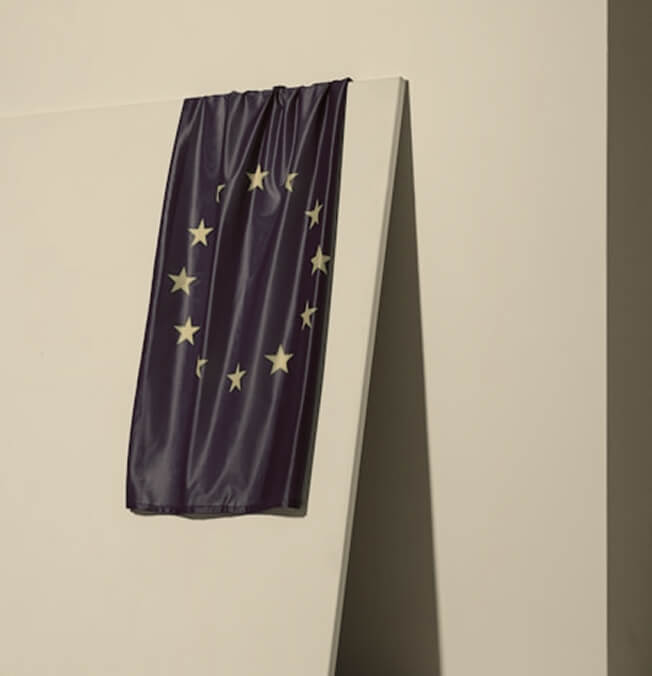
A blue flaf with the EU stars displayed on it

Wallonia: context-driven, relationship-led, narrative-first.

French-speaking Belgian media operates differently. L'Echo, Le Soir, and Trends-Tendances are interested in your story ;the human side, the strategic ambition, the broader picture. Context matters. Relationships matter. A cold press release will go nowhere. Walloon journalists are thorough. They will ask follow-up questions. They want to understand what you are doing and why it matters to their readers. The stories that land in Wallonia are the ones that connect a business development to something their audience is already thinking about. We know how to tell your story in French, not translated, but rebuilt for that market.
Get in touch

Brussels is the exception that needs its own playbook.

A stack of vertical newspapers
Brussels sits between both worlds and belongs fully to neither. It is bilingual, international, and home to the EU institutions, NATO and the largest concentration of press correspondents in continental Europe. For companies with a regulatory angle, a policy story or a public affairs dimension. Brussels is where you want to be seen. Coverage there travels. It reaches decision-makers, lobbyists and European journalists who pick up stories and carry them across the continent.
In Belgium, even the most complex things come beautifully wrapped. Your story should too.
Start your global journey
Symbol indicating a quote

Media outlets

No items found.
This is some text inside of a div block.
No items found.
This is some text inside of a div block.
No items found.
250+
Over 250+ active national and regional news outlets
The Belgium in numbers
  • Belgium has two fully separate media landscapes — Flemish and French-speaking — each with their own publications, journalists and editorial agenda
  • Brussels is home to over 1,000 accredited international press correspondents — more than almost any other city in continental Europe
  • Flanders accounts for roughly 60% of Belgium's GDP — its business media is among the most commercially literate in the Benelux
  • As the seat of the EU and NATO, coverage in Brussels media reaches policymakers and decision-makers across the entire continent
  • The Belgian press has one of the highest readership-per-capita rates in Western Europe